Short answer
Most residential hot-water boilers run at roughly 12 to 20 psi when warm. Pressure creeping toward 30 psi usually points to a failed expansion tank or a leaking fill valve; pressure that keeps dropping usually means a leak or a relief valve that is letting water out. Steam boilers are different: they run at only ounces to a couple of psi.
What normal pressure looks like
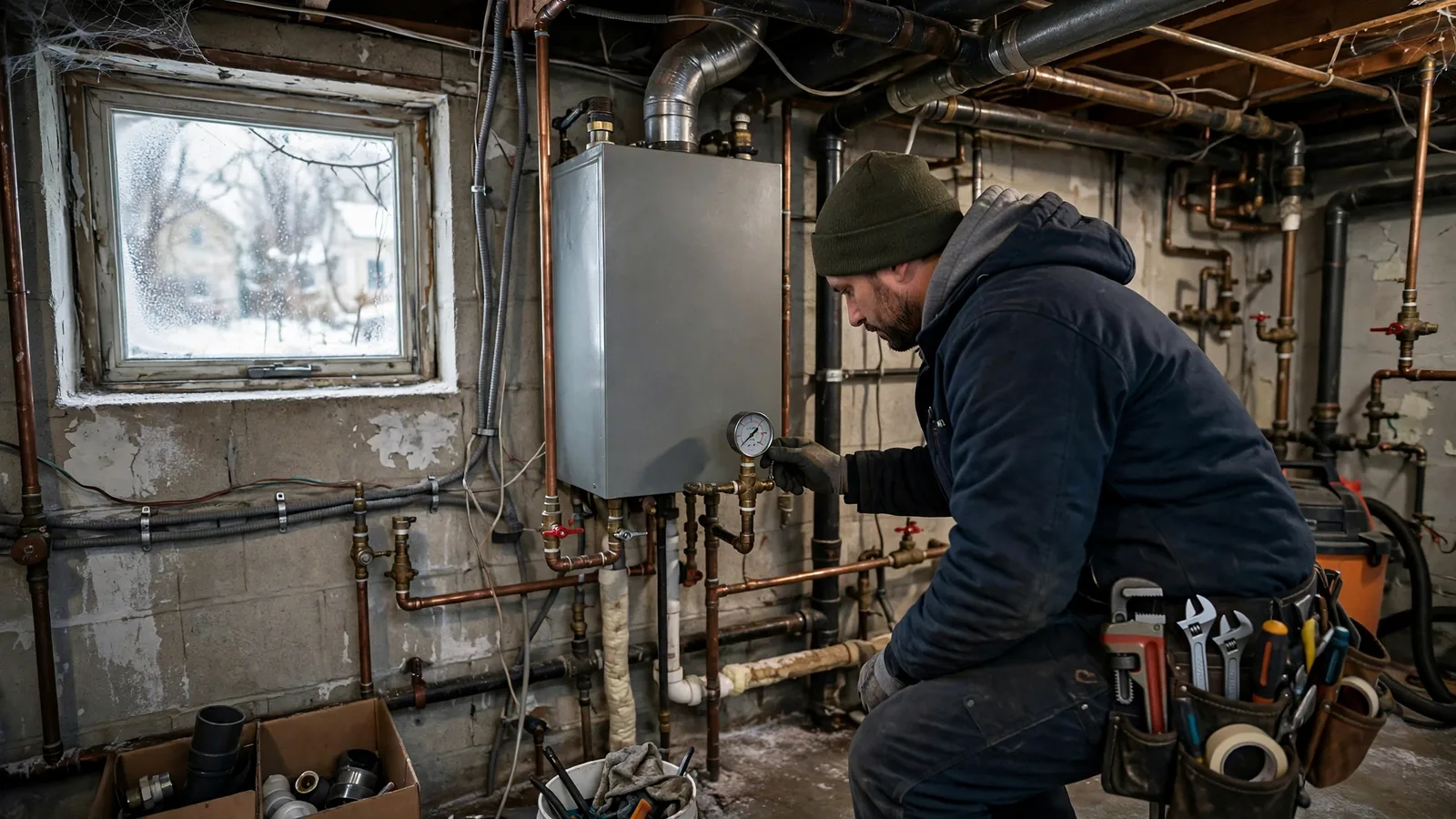
A hot-water (hydronic) boiler is a closed loop. It is filled to a cold pressure that lifts water to the top of the building, typically about 12 psi for a two-story house, and it rises a few psi as the water heats and expands.
Taller buildings, such as triple-deckers, need more fill pressure for water to reach the top-floor radiators. That is why the right number for your home depends on its height, and why a technician sets it rather than a one-size rule.
- Cold: often around 12 to 15 psi
- Running: often around 15 to 20 psi
- Relief valve: usually opens at 30 psi
- Steam boilers: ounces to about 2 psi, read on a separate low-pressure gauge
Why pressure climbs too high
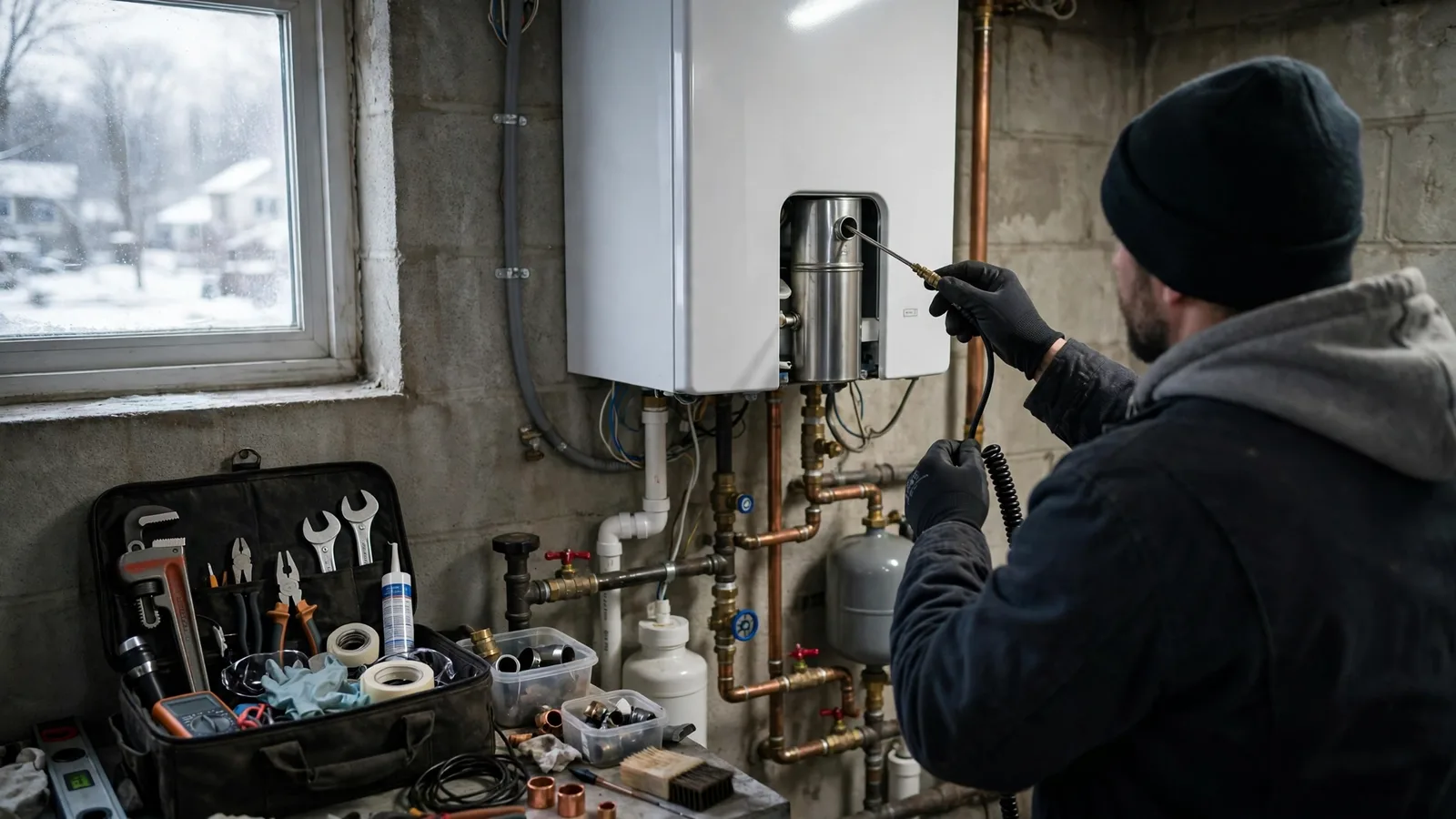
Water expands as it heats. The expansion tank, a small tank on the piping, absorbs that extra volume. When its internal air charge is lost or the bladder fails, the expansion has nowhere to go and pressure spikes during every heating cycle.
The other common cause is a fill (pressure-reducing) valve that leaks through, slowly pushing city water into the system. In boilers that also make domestic hot water through an internal coil, a failed coil can do the same.
- Waterlogged or failed expansion tank
- Fill valve letting in water continuously
- Leaking domestic hot-water coil
- Gauge itself stuck or inaccurate
Not sure it is safe to keep running? A local technician can check it today.
Call NowWhy pressure keeps dropping
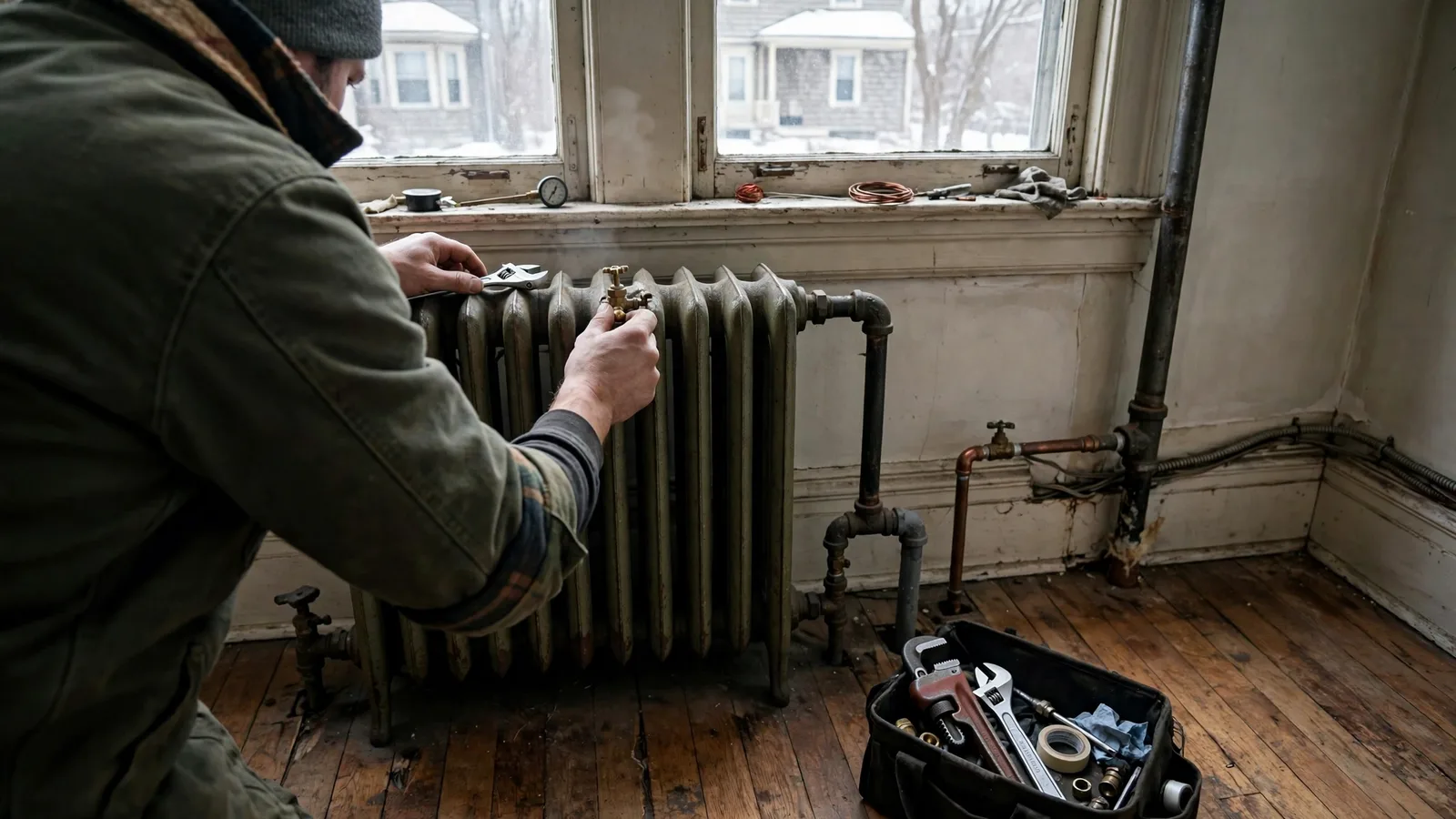
A closed loop should hold pressure for months. If you keep adding water, it is leaving somewhere: a weeping fitting, a radiator valve, a baseboard elbow, a cracked boiler section, or a relief valve that opens because pressure spikes first and then falls.
Look for water stains under radiators and baseboard, drips at the boiler, and a wet pipe running from the relief valve to the floor.
What you can safely check
Reading the gauge, noting the number cold and hot, and looking for drips are all safe. Bleeding radiators releases trapped air and may lower pressure slightly.
Do not cap or plug a relief valve that is discharging. It is a safety device, and a boiler that cannot relieve excess pressure is dangerous.
- Note the gauge reading cold and at full temperature
- Check under radiators and around the boiler for water
- Look at the relief valve discharge pipe for water
- Turn the boiler off if water is spraying from the relief valve
When to call a technician
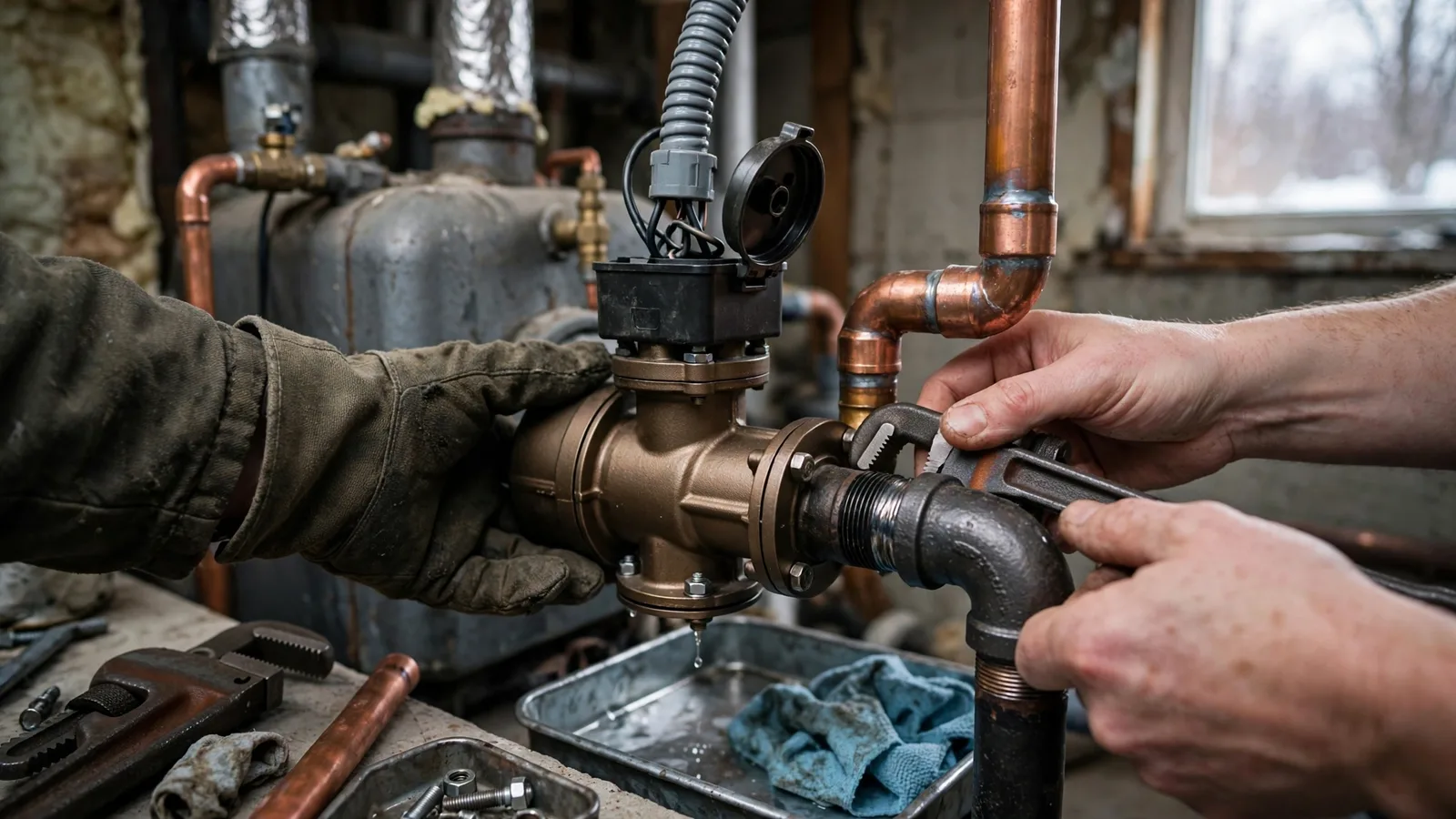
Call if pressure reaches 30 psi, the relief valve discharges, you have to add water more than occasionally, or a steam boiler's water level keeps dropping. Expansion tanks, fill valves and relief valves are routine parts for a heating technician to test and replace.
Related questions
Is 30 psi on a boiler dangerous?
It means the relief valve is about to open, or already is. Turn the boiler off and call. The system is protected by the valve, but the cause needs to be fixed.
Can I drain some water to lower the pressure?
You can, through the boiler drain, but if the expansion tank or fill valve has failed, pressure will rise again. Draining only treats the symptom.
How often should I add water to my boiler?
A hot-water boiler should rarely need water. A steam boiler loses some water as steam and may need topping up, but frequent additions point to a leak.
Services that fix this
Boiler Repair
Gas and oil boilers that will not fire, lock out, leak or lose pressure.
Boiler repair in Medford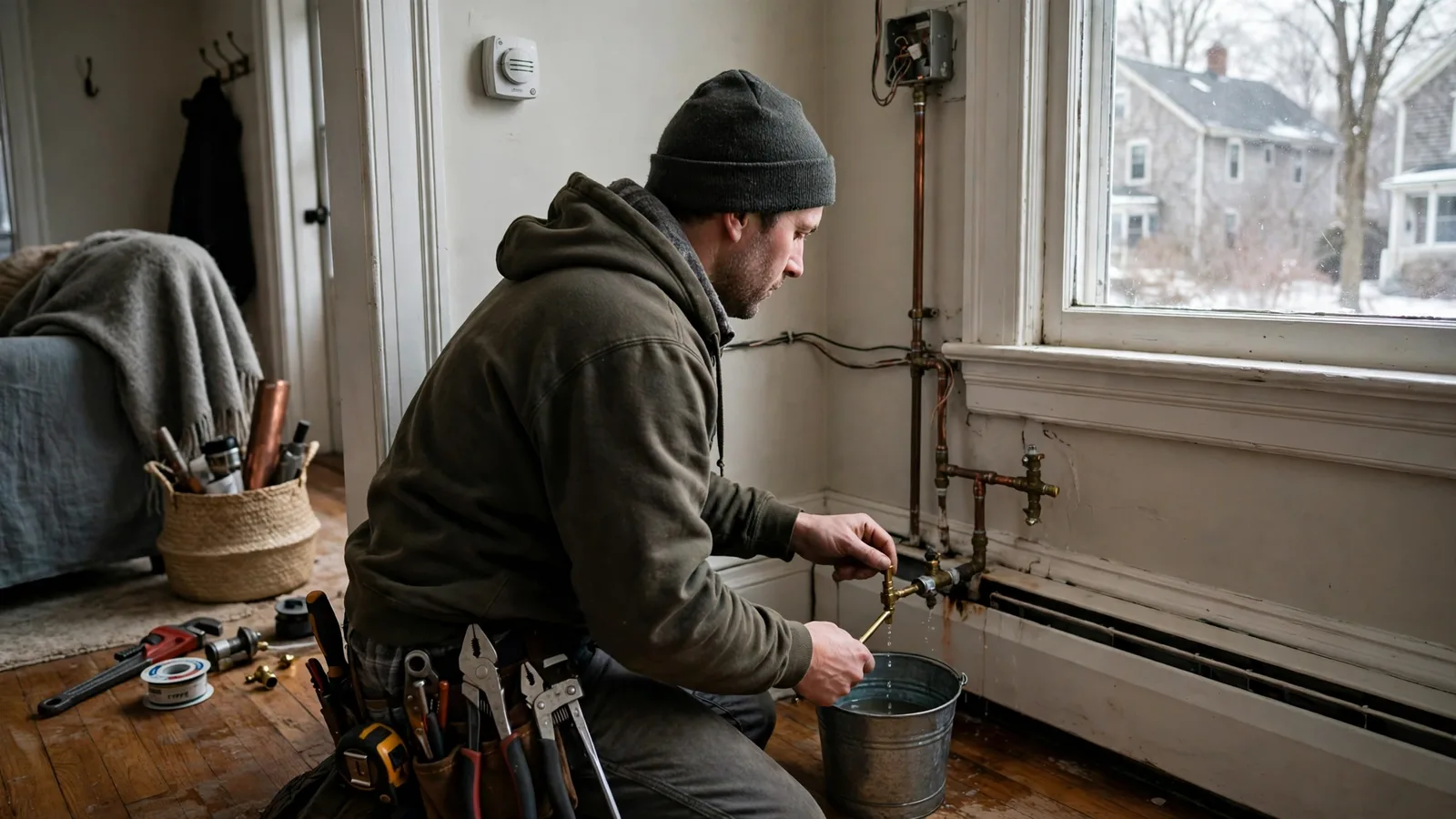
Radiator & Baseboard Heat Repair
Cold zones, air in lines, leaking valves and failed zone valves in hot-water heat.
Radiator repair in MedfordThis guide is general information for homeowners, not a diagnosis of your system. For anything involving gas, carbon monoxide, electricity or active leaks, stop and call a qualified professional.